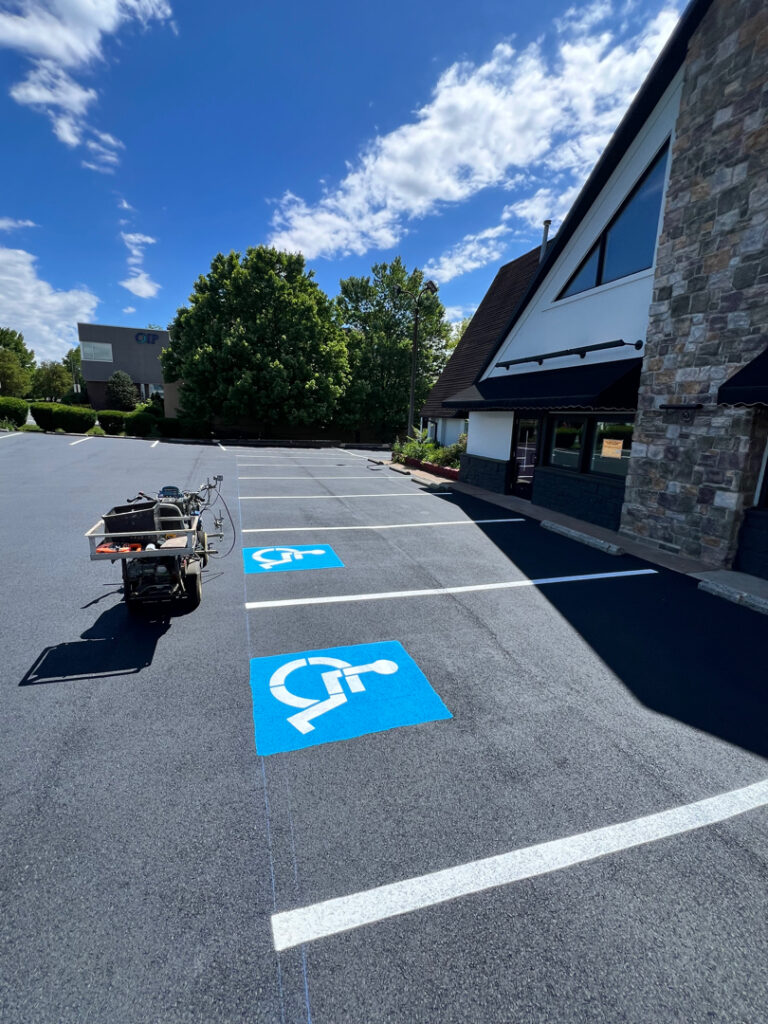
 In a place like Hershey, PA, pavement striping takes more abuse than many property owners realize. Between seasonal tourism, delivery traffic, and daily commuter flow along corridors like Route 422 and Chocolate Avenue, painted lines are under constant pressure.
When striping fails, it creates safety risks, ADA issues, and compliance headaches that no commercial property manager wants. Below, we break down why striping is harder in high-traffic areas and how we plan durable solutions that stand up to real-world use.
Key Takeaways
- High-traffic areas wear striping faster due to turning movements, truck loads, and constant use.
- Weather and underlying pavement conditions in Hershey significantly affect striping longevity.
- Durable striping requires proper material selection and coordination with other pavement work.
- Proactive planning reduces compliance risks and extends the life of pavement markings.
Common Factors That Complicate Pavement Striping in High-Traffic Areas
High-traffic environments introduce multiple variables that make striping more complex than a standard office lot or low-use facility. Understanding these factors is the first step toward longer-lasting results.
Constant Vehicle Wear and Turning Movements
Busy commercial properties in Hershey see nonstop vehicle movement, especially near attractions, hotels, and retail centers around Hersheypark Drive. Turning tires scrub striping far faster than straight-line traffic.
This is especially true at entrances, fire lanes, loading zones, and drive lanes where delivery trucks pivot sharply. Without accounting for this wear pattern, even fresh striping can fade in months instead of years.
Heavy Truck and Delivery Traffic
Retail plazas, warehouses, and food service facilities near the Route 39 and I-81 corridors deal with frequent box trucks and tractor-trailers.
These vehicles exert significantly more pressure on pavement markings than passenger cars. Standard traffic paint often cannot handle this load, leading to premature failure.
The weight and braking force of trucks also accelerate surface abrasion, especially in loading docks and service alleys.
Weather Exposure and Seasonal Extremes
Central Pennsylvania weather is tough on pavement markings. Freeze-thaw cycles in winter, road salt carried in by vehicles, and summer heat all degrade striping materials.
In Hershey, snow removal equipment can scrape markings, while spring rain exposes weaknesses in surface prep. High-traffic areas amplify these issues because moisture and debris are constantly ground into the surface.
Poor Pavement Condition Beneath Striping
Striping is only as durable as the asphalt beneath it. Many older commercial lots in Derry Township have surface oxidation, cracking, or previous sealcoat failure.
In high-traffic areas, these defects spread quickly under load. Applying new striping without addressing pavement condition often results in peeling, ghosting, or uneven lines that fail inspections and confuse drivers.
ADA and Code Compliance Pressures
Busy commercial sites have less margin for error when it comes to compliance. ADA parking stalls, access aisles, and fire lanes must remain clearly visible at all times.
In high-traffic locations like medical offices or hotels near major attractions, faded striping can trigger complaints or enforcement actions. Local inspections and federal ADA standards leave little tolerance for striping that wears prematurely.
Planning Durable Striping Solutions for Busy Commercial Properties
Durable striping in high-traffic areas requires more than repainting lines. It demands planning, coordination, and material choices tailored to how the property actually functions day to day.
Evaluating Traffic Flow and Use Patterns
Every successful striping project starts with understanding how the site is used. We assess where vehicles accelerate, brake, idle, and turn. In Hershey-area retail centers, that often means heavy congestion near main entrances during peak tourism seasons.
Identifying these stress points allows us to recommend reinforced materials or layout adjustments that reduce wear and improve safety.
Selecting Materials Built for High Traffic
Not all striping materials perform the same. For high-traffic commercial properties, we often recommend high-build traffic paints, thermoplastic markings, or specialty coatings, depending on budget and usage.
These materials cost more upfront but deliver better longevity under constant vehicle load. The right choice depends on truck volume, pavement condition, and maintenance expectations.
Coordinating With Sealcoating and Pavement Repairs
Timing matters. Striping over fresh sealcoat or unstable asphalt can shorten its lifespan. We coordinate striping with sealcoating and repairs to ensure proper curing and adhesion.
On busy Hershey properties that cannot fully shut down, phased work and off-hours scheduling are often necessary to maintain access while still achieving quality results.
Planning for Minimal Operational Disruption
High-traffic properties rarely have the luxury of extended closures. We plan striping work during low-traffic windows, such as overnight or early morning hours, especially for hotels, distribution centers, and healthcare facilities.
Clear staging and fast-drying materials help reopen lanes quickly while still meeting durability requirements.
Building a Maintenance and Re-Striping Strategy
Even the best striping will not last forever in high-traffic conditions. Planning for scheduled touch-ups and re-striping prevents sudden compliance issues.
For commercial clients in Hershey, we often recommend proactive inspections tied to seasonal changes or peak traffic periods. This approach spreads costs over time and avoids emergency repairs.
Take Control of Striping Performance in High-Traffic Areas
High-traffic striping failures are not just cosmetic. They affect safety, liability, and compliance for busy commercial properties. At ProSeal Asphalt Maintenance Inc., we take a strategic approach that matches materials, timing, and layout to how your property actually operates in Hershey, PA.
If your lot sees constant traffic and fading lines, now is the time to address it before it becomes a bigger problem. Contact us to schedule a site walkthrough and get a durable striping plan built for real-world use.
Frequently Asked Questions
How often should high-traffic commercial lots in Hershey be restriped?
High-traffic commercial properties typically need evaluation every 12 to 24 months, depending on traffic volume and material type. Thermoplastic or high-build paints can extend that cycle, but seasonal wear from winter maintenance often shortens timelines in central Pennsylvania.
Can striping be done without shutting down our entire parking lot?
Yes, most high-traffic sites require phased striping plans. Work is commonly scheduled overnight or during low-use periods, with sections completed sequentially to maintain access for tenants, deliveries, and emergency vehicles.
Does faded striping affect ADA compliance even if spaces are still visible?
Yes, ADA standards require clearly defined markings, including access aisles and signage. If striping is faded or partially missing, it can be considered non-compliant during inspections or in response to complaints.
Should pavement repairs be completed before new striping?
In most cases, yes. Cracks, surface raveling, or failed sealcoat can prevent proper adhesion. Addressing these issues first improves striping durability and helps avoid premature peeling or ghosting.