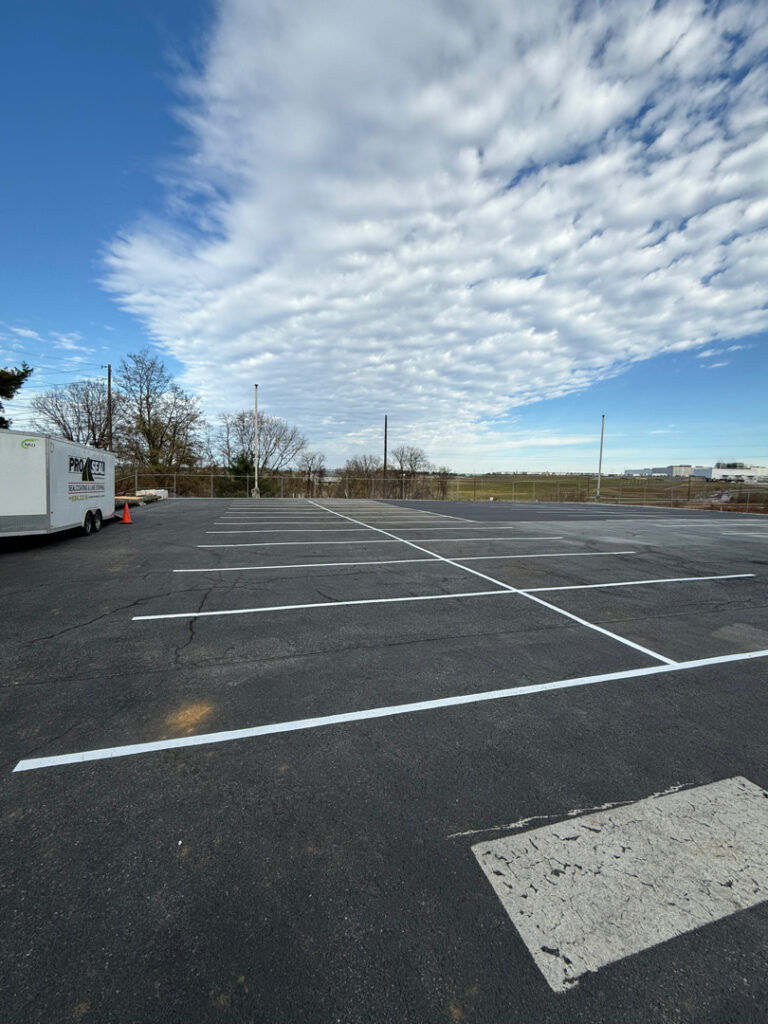
 Building a new parking lot in Hershey is not just about laying asphalt and striping stalls. Between Dauphin County permitting, local stormwater rules, and the steady mix of tourist traffic around Route 39 and Chocolate Avenue, early planning makes or breaks the project. Miss a step, and costs rise fast, or schedules slip.
Get it right, and you end up with a durable, compliant lot that serves tenants, customers, and deliveries without headaches. Below, we walk through the early planning steps we recommend before any new construction parking lot moves forward.
Key Takeaways
- Early planning reduces redesigns, delays, and unexpected costs during new parking lot construction.
- Soil conditions, drainage, and zoning in Hershey directly affect pavement design and approval timelines.
- Coordinated design, permitting, and contractor selection protect long-term performance and compliance.
- Scheduling around Central Pennsylvania weather improves construction quality and durability.
1. Clarify Site Use and Traffic Patterns
Before any design work begins, you need a clear picture of how the lot will actually be used.
A retail plaza near Hersheypark draws very different traffic than a medical office off Fishburn Road or a warehouse closer to I-81. Delivery trucks, employee parking, ADA access, and seasonal surges all affect layout and pavement thickness.
Defining these patterns early helps avoid redesigns once engineering is underway.
2. Evaluate Existing Soil and Subgrade Conditions
Soil conditions in the Hershey area vary more than many owners expect, especially near former farmland or creek-adjacent parcels. Weak subgrade or high clay content can lead to rutting and premature failure if it is not addressed.
Early geotechnical review allows for proper base depth and stabilization methods, which directly impacts long-term performance and lifecycle cost.
3. Establish Drainage and Stormwater Strategy
Central Pennsylvania rainfall and winter freeze-thaw cycles make drainage a top priority. Dauphin County and local municipalities require stormwater management plans that control runoff and protect nearby waterways.
Catch basins, grading, and detention features need to be planned before design drawings are finalized. Waiting too long often leads to costly revisions or permit delays.
4. Define Budget Range and Lifecycle Goals
A new parking lot is a long-term asset, not a short-term expense.
Early budget planning should balance upfront construction costs with expected maintenance over 20 to 30 years. Thicker asphalt sections, quality base materials, and proper compaction cost more initially but reduce repairs later.
Establishing realistic ranges upfront keeps decisions aligned as the project progresses.
5. Confirm Zoning and Land Development Requirements
Hershey-area zoning ordinances dictate parking counts, stall dimensions, setbacks, and landscaping. Some commercial corridors also require land development approvals before construction can begin.
Verifying these requirements early avoids redesigns and ensures the lot meets both municipal and tenant expectations.
6. Identify Utility Conflicts and Access Points
Underground utilities are common along established commercial corridors like Cocoa Avenue.
Water, gas, electric, and telecom lines must be located and protected during construction. Early coordination also helps define curb cuts and access points that meet PennDOT or local roadway standards.
7. Account for Phasing and Business Continuity
If the site is part of an existing operation or expansion, phasing matters.
Maintaining access for tenants, employees, and deliveries can influence layout and construction sequencing. Early planning allows the lot to be built in stages without disrupting daily operations or violating occupancy requirements.
Preparing for Design, Permitting, and Contractor Selection
Once the site fundamentals are defined, the focus shifts to execution.
These next steps prepare your project for design review, permitting, and construction by reducing risk, tightening coordination, and setting clear expectations before work begins.
Assemble the Right Design Team
Civil engineers, surveyors, and paving professionals should be involved early, not brought in after decisions are made. Local experience matters in Hershey, where stormwater, grading, and ADA compliance are closely reviewed.
A coordinated team reduces conflicts between design intent and constructability.
Develop Permit-Ready Construction Documents
Clear, complete drawings speed up municipal review and reduce questions during bidding.
These documents should address grading, drainage, pavement sections, striping, signage, and erosion control. In Dauphin County, incomplete submissions are a common reason for permit delays, so accuracy upfront saves weeks later.
Plan for Inspections and Compliance
New parking lot construction often requires multiple inspections, from base preparation to final asphalt paving. Knowing inspection requirements early helps avoid failed inspections and rework.
Compliance with ADA, local codes, and any PennDOT access approvals should be confirmed before construction starts.
Prequalify Commercial Paving Contractors
Not all paving contractors handle new construction well.
Prequalification should focus on experience with full-depth construction, stormwater coordination, and commercial scheduling. Contractors familiar with Hershey-area regulations and traffic conditions are better equipped to manage the project efficiently.
Align Construction Schedule With Seasonal Conditions
Central Pennsylvania weather plays a major role in paving schedules.
Spring rains and late fall temperature swings can affect asphalt quality and compaction. Early planning allows construction to be scheduled during optimal paving windows, reducing risk and improving results.
Review Warranties and Maintenance Expectations
Understanding what is covered under workmanship warranties and what maintenance is expected after construction sets clear expectations. Sealcoating cycles, crack management, and line striping should be discussed before contracts are signed.
This protects the investment long after the final inspection.
Confirm Communication and Project Management Processes
Clear lines of communication between the owner, contractor, and inspectors keep projects on track. Early agreement on reporting, change management, and site access prevents confusion once construction begins.
In busy commercial zones around Hershey, coordination is essential.
Plan Your Parking Lot Project With Confidence
A successful new construction parking lot starts long before equipment arrives on site.
At ProSeal Asphalt Maintenance Inc., we help commercial property owners in Hershey plan, design, and execute parking lot projects that meet code, stay on schedule, and perform for the long haul. If you are preparing for a new build or expansion, let us walk the site and review your early planning steps now so problems are solved before construction begins.
Call us to schedule a commercial site consultation and get clear direction on next steps.
Frequently Asked Questions
How early should we start planning a new parking lot in Hershey?
Starting planning six to twelve months before construction is common for commercial sites, allowing time for surveys, engineering, stormwater review, and Dauphin County permitting without rushing decisions.
Do new parking lots always require stormwater permits here?
Most new construction does, especially when impervious area thresholds are exceeded, and plans typically must meet municipal and county stormwater management ordinances.
What pavement thickness is typical for commercial lots?
Thickness varies based on traffic loads and soil conditions, but commercial lots with delivery traffic often require a deeper aggregate base and multiple asphalt lifts to meet performance expectations.
Can construction be phased to keep our property accessible?
Phased construction is often possible and commonly used for active commercial sites, but it must be planned into the design and approved by inspectors to maintain safe access and compliance.